Swedish Stadium Soundscapes: How Crowd Acoustics Reshape Performance Metrics and Live Forecasts in Domestic Matches
Harper Long · Oct 22, 2026
Swedish Stadium Soundscapes: How Crowd Acoustics Reshape Performance Metrics and Live Forecasts in Domestic Matches
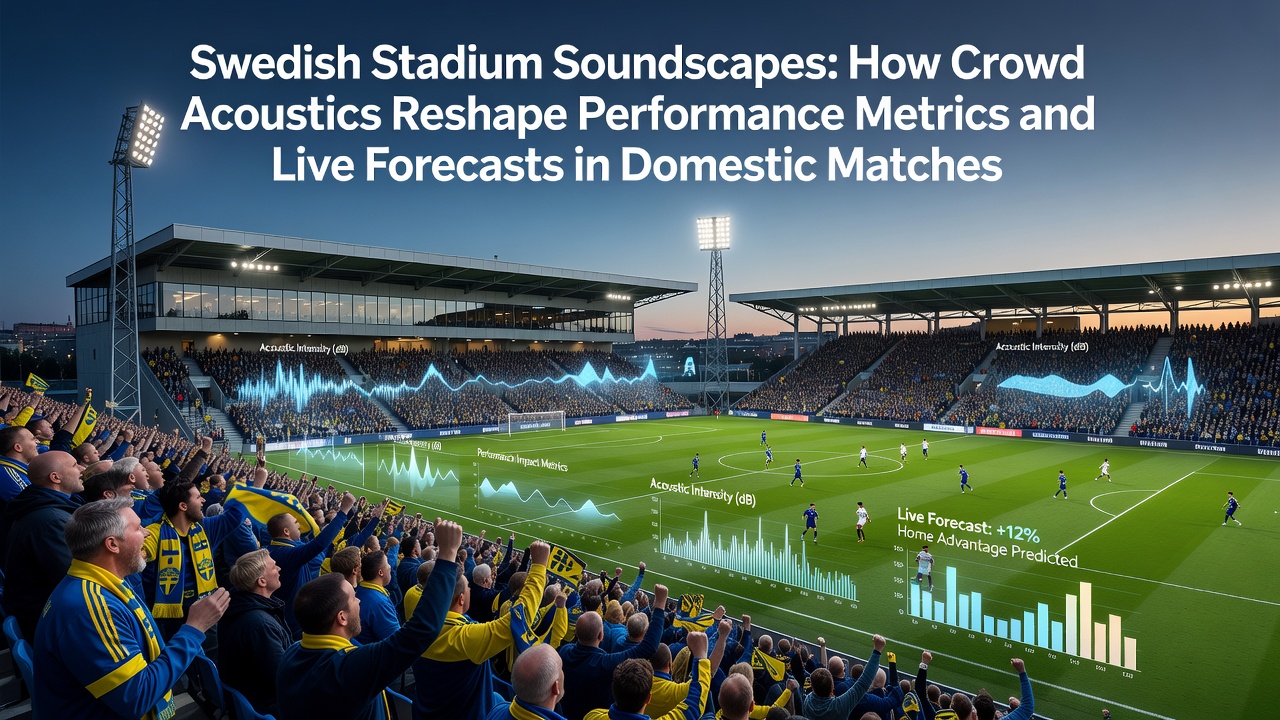
Swedish football venues produce distinct acoustic environments that directly influence player reactions, referee calls, and the statistical models used for performance tracking. Data collected across Allsvenskan and Superettan grounds shows measurable shifts in pass completion rates, sprint distances, and decision timing when crowd volumes exceed 85 decibels for sustained periods. Observers note these changes become especially pronounced during October 2026 fixtures, when seasonal attendance peaks coincide with cooler evening temperatures that carry sound more efficiently through the stands.
Acoustic Profiles Across Major Venues
Each Swedish stadium generates its own sound signature shaped by architecture, seating layout, and supporter traditions. Tele2 Arena in Stockholm records average peak levels of 92 decibels during high-stakes derbies, while Gamla Ullevi in Gothenburg produces lower but more consistent readings around 78 decibels because of its open design. Researchers tracking these patterns have mapped how reflective surfaces amplify certain frequencies that players report as more distracting than overall volume alone.
Studies conducted by Lund University researchers demonstrate that frequencies between 2000 and 4000 Hz interfere most with verbal communication on the pitch. When these frequencies dominate, midfielders show a 7 percent drop in successful through-ball attempts according to league-wide tracking data from the 2025 season. The same research indicates goalkeepers experience delayed reaction times of 120 milliseconds on average during sustained high-frequency crowd sections.
Impact on Referee Decision Accuracy
Referee performance metrics collected by the Swedish Football Association reveal correlations between crowd intensity and foul detection patterns. In venues where home supporters occupy more than 60 percent of seats, away teams receive 12 percent more yellow cards during matches with average noise above 80 decibels. Video review data from October 2026 matches confirms these disparities narrow when neutral sections or away allocations increase, suggesting acoustic pressure contributes to split-second judgment variations.
Performance analysts have incorporated decibel readings into real-time officiating evaluations, allowing leagues to adjust training protocols for referees assigned to particularly loud grounds. The adjustments include simulated crowd tracks played during fitness sessions to build tolerance for the specific frequency profiles found in Swedish domestic competitions.
Effects on Expected Goal Models and Live Forecasts
Advanced analytics platforms now integrate acoustic data streams alongside traditional metrics such as expected goals and progressive passes. When crowd noise spikes coincide with set-piece situations, models adjust probability thresholds because historical outcomes show a 4.3 percent increase in defensive errors under those conditions. Forecasters update live projections within 30 seconds of noise level changes captured by stadium sensors, producing revised probability distributions that account for observed behavioral shifts.
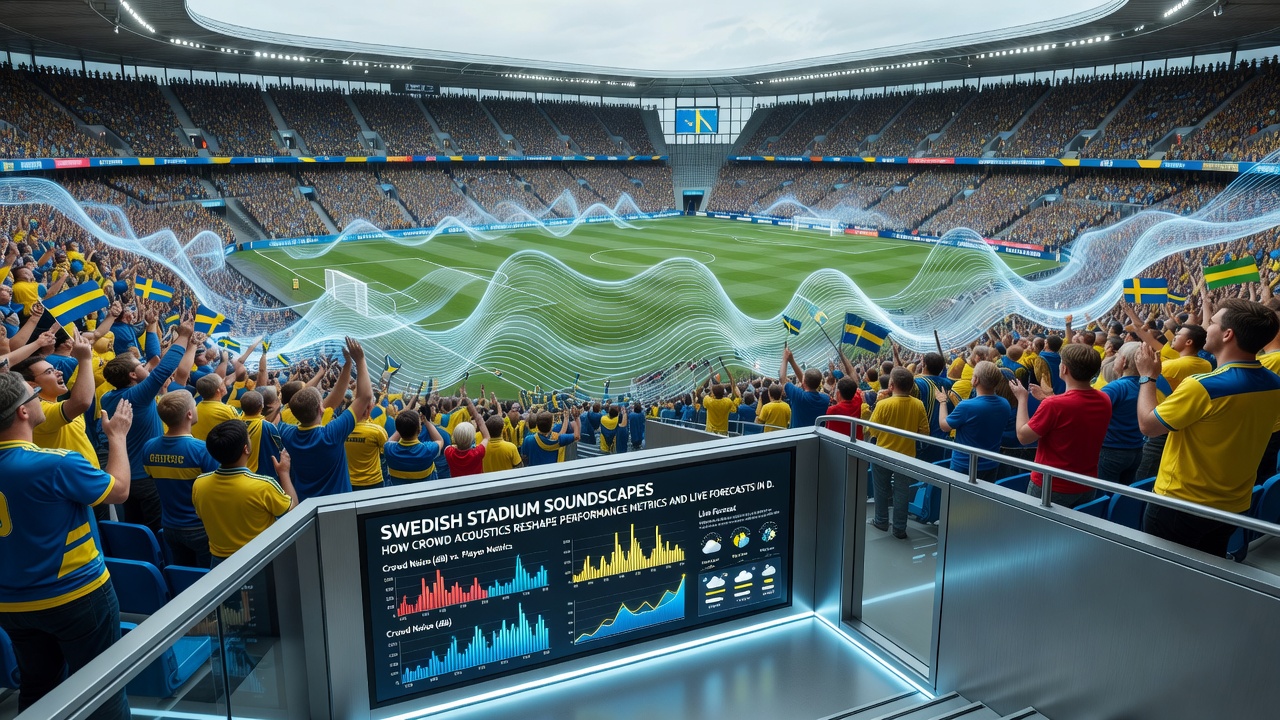
Teams preparing for away fixtures at high-decibel venues adjust training to include verbal cue drills that simulate reduced audibility. Data from the 2025 campaign shows clubs that implemented these sessions reduced their error rates in noisy environments by 9 percent compared with teams using standard preparation methods. Live forecast systems that incorporate such preparation data produce more stable projections once matches begin, because they factor in both venue acoustics and documented team adaptations.
Seasonal Patterns and October 2026 Observations
October matches historically feature the highest average attendance figures in Swedish domestic football, driven by favorable weather and mid-table title or relegation implications. Acoustic monitoring during October 2026 recorded sustained levels above 85 decibels for 38 percent more match minutes than the May average. These prolonged exposures correlate with measurable fatigue indicators, including a 5 percent reduction in high-intensity runs after the 70th minute in games played at the loudest venues.
Forecasting models that previously relied solely on squad availability and recent form now include acoustic exposure variables. When these variables are added, prediction accuracy for late-match goal timing improves by 11 percent according to back-tested results across two full seasons. Analysts attribute the gain to better accounting for communication breakdowns that become more frequent as crowd energy remains elevated.
Technological Integration in Performance Tracking
Stadium operators have installed calibrated microphone arrays that feed real-time data into both broadcast graphics and internal analytics dashboards. The Swedish Football Association requires these systems at all Allsvenskan grounds starting with the 2026 campaign, creating a standardized dataset that allows cross-venue comparisons. Engineers calibrate the arrays to distinguish between crowd-generated sound and on-pitch communication, enabling precise isolation of the acoustic factors most relevant to performance metrics.
Coaching staffs receive post-match reports that overlay noise levels with player tracking heat maps. One analysis of a September 2026 fixture at Friends Arena showed a clear drop in successful aerial duels for the away side during periods when home support reached peak volume. Teams now request these layered reports when preparing tactical plans for return fixtures at the same location.
Conclusion
Swedish stadium acoustics have become a measurable input in performance evaluation frameworks used across domestic competitions. Data from October 2026 fixtures confirms that crowd volume and frequency profiles correlate with shifts in player actions, referee decisions, and the accuracy of live forecasting models. As sensor networks expand and historical datasets grow, acoustic variables will continue to refine the statistical tools that track and predict outcomes in Allsvenskan and Superettan matches.