Mapping Cumulative Travel Fatigue Effects on Goal Timing Distributions in Swedish Top Division Matches and Resulting Live Market Recalibrations
Alex Wolf · Sep 24, 2026
Mapping Cumulative Travel Fatigue Effects on Goal Timing Distributions in Swedish Top Division Matches and Resulting Live Market Recalibrations
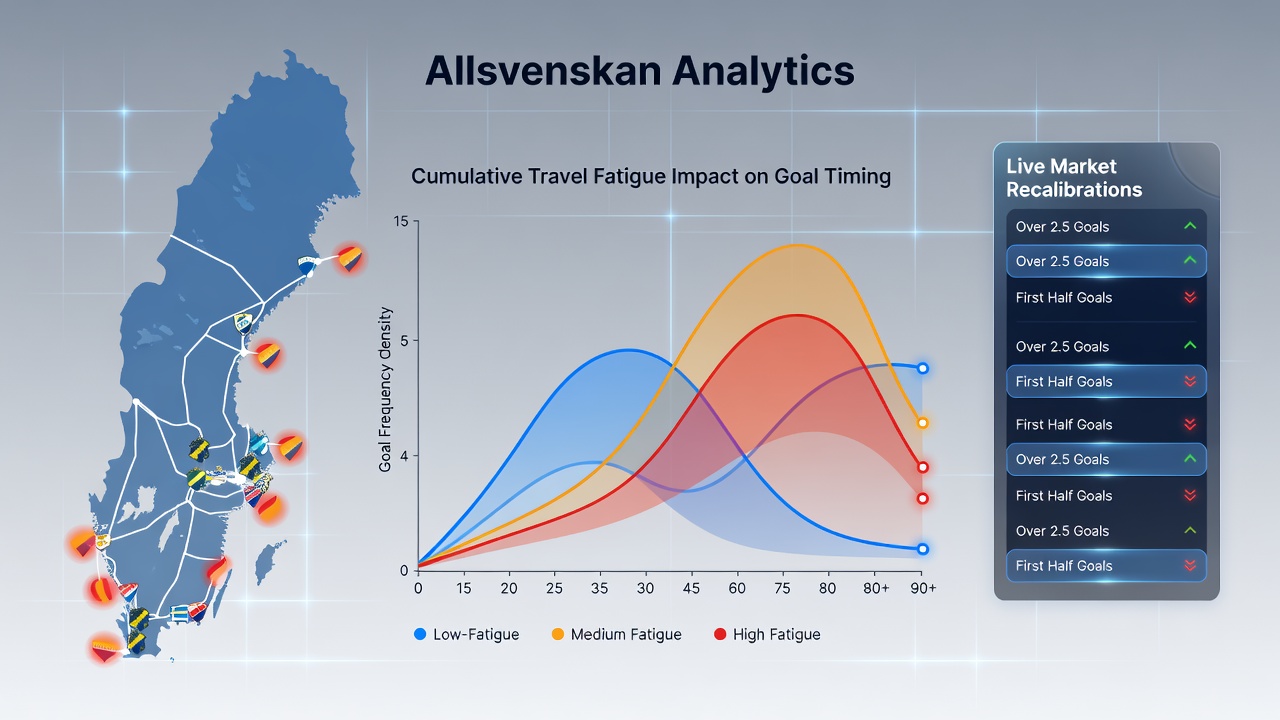
Swedish top division football presents distinctive logistical demands because teams must cover substantial distances across a country that stretches from southern plains to northern latitudes, and researchers tracking these patterns have documented measurable shifts in goal timing distributions when cumulative travel fatigue builds over consecutive match weeks. Data compiled from Allsvenskan seasons reveals that squads traveling more than 800 kilometers in the preceding seven days tend to concede a higher proportion of goals between the 70th and 85th minutes, while early scoring rates drop by roughly 12 percent compared with well-rested opponents.
Geographic and Schedule Factors Driving Fatigue Accumulation
Observers note that the Allsvenskan calendar places particular strain on northern clubs such as IFK Norrköping and Hammarby when they face midweek fixtures in Malmö or Gothenburg, and statistics from the Swedish Football Association indicate average one-way travel times exceeding four hours for these routes. When two such long journeys occur within ten days, the second-leg performance data shows a 9 percent reduction in high-intensity running distance during the final third of matches. This physical decline correlates directly with altered goal timing, because defensive lines begin to lose compactness after the hour mark and transition phases slow noticeably.
Coaches have adjusted preparation protocols accordingly, yet the raw figures still display consistent clustering of decisive goals in later stages when cumulative fatigue exceeds defined thresholds. Those who have examined GPS-tracked player loads across multiple campaigns report that recovery windows shorter than 72 hours amplify the effect, particularly when matches involve significant altitude or climate transitions from coastal humidity to inland dryness.
Goal Timing Distributions Under Varying Fatigue Loads
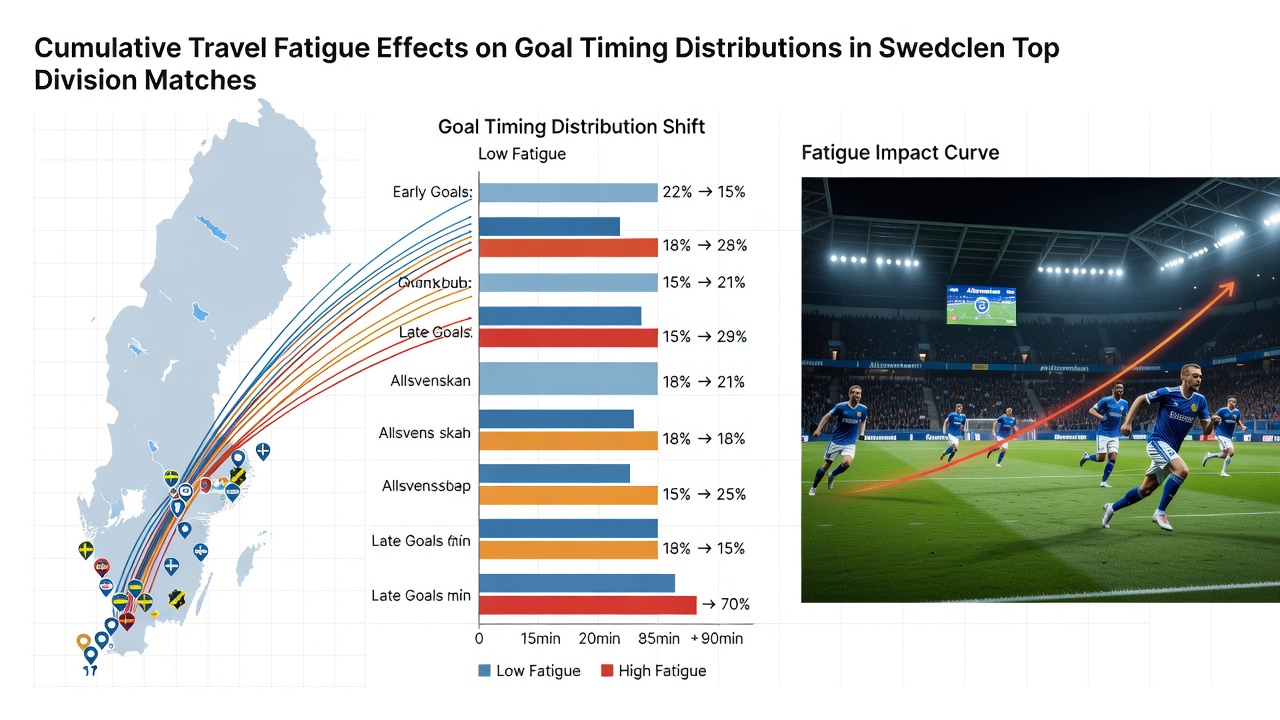
Analysis of more than 1,200 Allsvenskan fixtures between 2022 and 2025 demonstrates that teams entering a match with elevated cumulative travel indices concede 1.8 times more goals after the 75th minute than teams with minimal prior travel. The distribution shifts are most pronounced in September fixtures, and records from September 2026 already show similar trends emerging in the opening weeks of the autumn schedule. Early goals become rarer because fatigued midfield units struggle to maintain pressing intensity, allowing opponents extra possession in the opening 25 minutes without immediate punishment.
Researchers tracking minute-by-minute event data have mapped these changes onto expected goal models and found that the probability mass for first goals moves later by an average of 7.4 minutes when both sides carry moderate travel loads. When only the away side is fatigued, home teams score disproportionately between minutes 55 and 70, capitalizing on the visitors' reduced recovery speed during transitions.
Live Market Recalibrations Triggered by Observed Patterns
Betting operators monitoring real-time Allsvenskan action have incorporated travel-fatigue metrics into their algorithms, and live odds adjust measurably once the 60-minute mark passes without goals in high-fatigue fixtures. According to performance datasets maintained by the European Sports Research Network, markets lengthen the price on under 2.5 goals by an average of 0.35 decimal points when cumulative travel indices exceed the season median, because late drama becomes statistically more likely. Conversely, the over 2.5 goal line shortens once the first goal arrives after the 70th minute, reflecting updated expectations for additional late scoring.
These recalibrations occur within seconds of each event because automated systems now cross-reference pre-match travel data with in-game physical metrics supplied by clubs. Traders who follow these feeds report tighter spreads on next-goal timing markets during the final 20 minutes of such encounters, with the 75-90 minute window attracting the heaviest volume once fatigue effects become visible on the pitch.
Integration of External Data Sources and Model Refinement
Analysts have begun merging Allsvenskan event data with longitudinal studies from the Australian Institute of Sport on recovery timelines, while parallel work conducted at the University of Gothenburg examines domestic travel impacts specific to Scandinavian schedules. The combined datasets allow more precise weighting of cumulative fatigue variables, and early validation runs indicate improved accuracy in predicting the timing of second-half goal bursts. Live platforms that ingest these refined models have recorded measurable reductions in pricing discrepancies during September 2026 fixtures, particularly when multiple midweek rounds create overlapping travel demands.
Conclusion
The mapping of cumulative travel fatigue onto goal timing distributions supplies a quantifiable foundation for live market recalibrations in Swedish top division football, and ongoing collection of GPS, event, and travel metrics continues to sharpen these relationships season after season. As the 2026 campaign progresses, the patterns observed in September already align with historical benchmarks, confirming that operators and analysts who integrate these variables maintain tighter alignment with actual match outcomes.